
This story is related to the landscape initiative “Chapadinha Sustainable 2050”, and originally published on SourceUp.
The project “SUSTAINABLE LANDSCAPE IN MARANHÃO: Local solutions to improve sustainable soybean production, productive restoration, and territorial governance” is being implemented in the Chapadinha region, in the state of Maranhão, by IPAM, in partnership with UFMA and supported by PROFREST, with validity until June 2027.
The goal is to contribute to strengthening sustainable agriculture in the Cerrado Maranhão by encouraging sustainable soybean production, promoting productive restoration, and supporting the strengthening of territorial governance, with advances in environmental regularization.
Productive restoration is a sustainable alternative that proves it is possible to produce and, at the same time, conserve, promoting ecological restoration and income generation through family farming practices. IPAM has been working on this issue in the region since 2022, supporting the preparation of the Sustainable Rural Development Plan for Family Production in the Chapadinha Microregion, which addresses the demand for restoration in the territory.
Additionally, it supported the implementation of a demonstrative and pedagogical unit of the Agroforestry System (SAF) at the Rural Family House (CFR) of Buriti, through the Sustainable Chains Project, promoted by the German Cooperation for Sustainable Development (GIZ) and the Government of Maranhão, between 2024 and 2025.
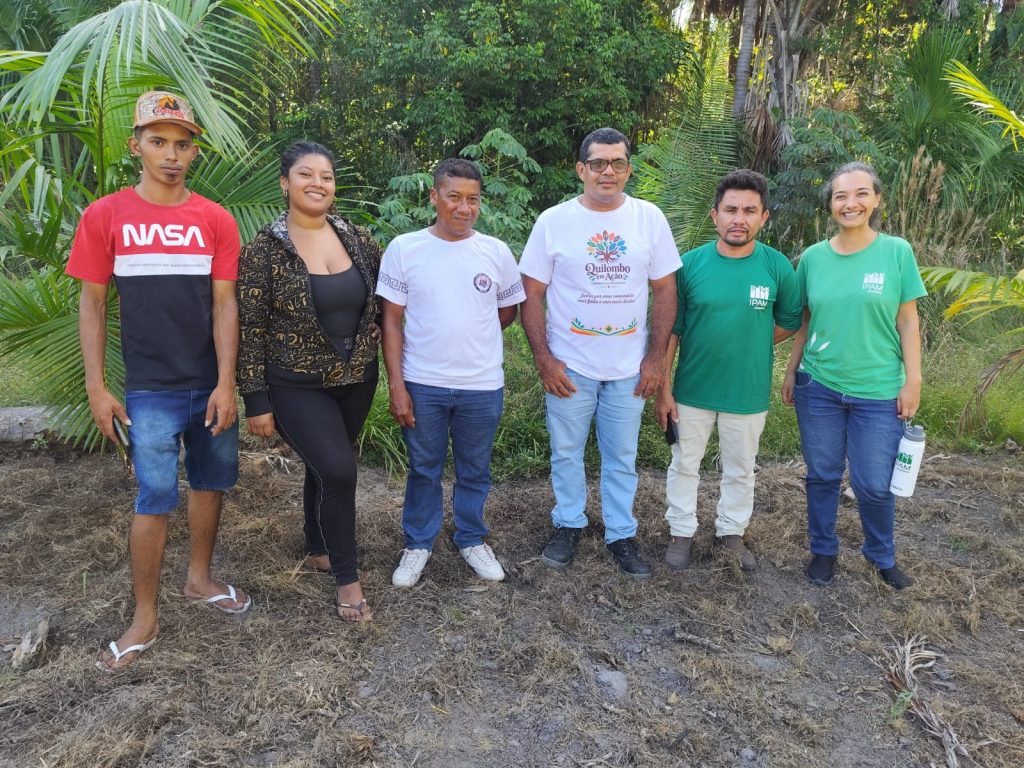
With the Sustainable Landscape project in Maranhão, IPAM will expand its activities, supporting 14 family farmers in the municipalities of Chapadinha, Buriti, and Brejo. These farmers will benefit from the implementation of SAFs on their properties, totaling an area of 10 hectares in the region, as well as access to hybrid technical assistance during the project’s development, through the ATER Paidégua app.
Furthermore, the project adopts as a premise the inclusion of women and young people, counting on the participation of 50% female farmers and 21% young women. The Restoration Plans for these properties, developed participatively with farmers, will include productive arrangements that consider forest components, fertilizing species, fruit trees, and short-cycle crops common in the region, such as cassava, corn, watermelon, among others.
This initiative is aligned with national, state, and regional public policies aimed at conserving and restoring native vegetation, promoting family farming, and sustainable rural development.
At the federal level, the National Plan for the Recovery of Native Vegetation (PLANAVEG, CONAVEG Resolution No. 4, dated 11/25/2024), the Native Vegetation Protection Law (Forest Code, Law No. 12,651/2012), and the National Policy for Family Agriculture and Rural Family Enterprises (Law No. 11,326/2006) stand out.
At the state level, the initiative engages with the State Plan for Sustainable and Solidarity Rural Development of Maranhão (PEDRSS, 2023), the State Plan for Low Carbon Agriculture (Plano ABC+, 2023), the Maranhão State Fruit Development Plan (PDFMA, 2024), the Action Plan for the Prevention and Control of Deforestation and Fires in Maranhão (PPCDQ, 2024), and the Maranhão 2050 Plan (2024).
At the regional level, the project converges with the Sustainable Rural Development Plan for Family Production of the Chapadinha Microregion (2022) and with the Chapadinha Sustainable 2050 strategy.