
This story is related to the landscape initiative “Aceh Tamiang”, and originally published on SourceUp.
News Article
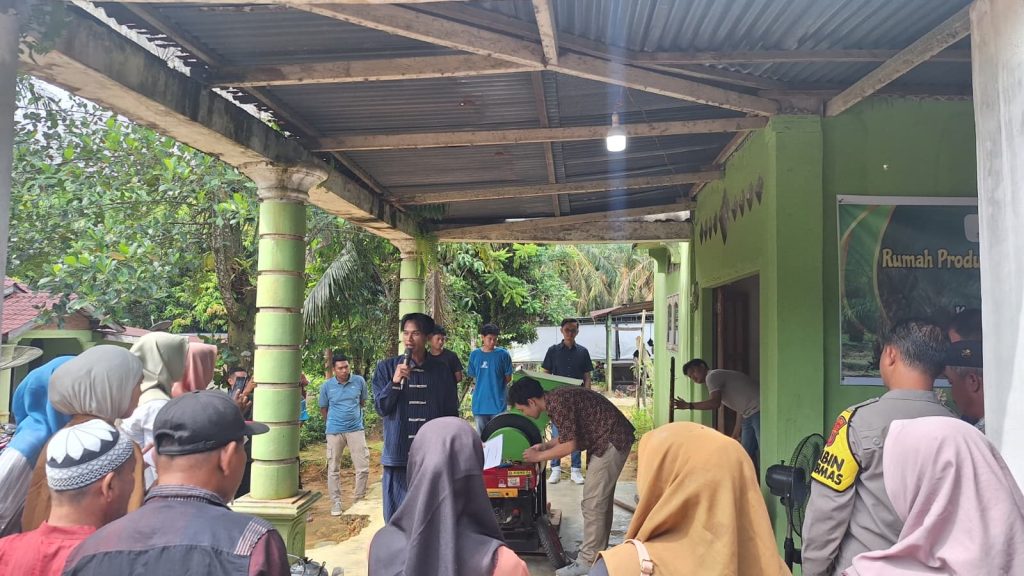
Aceh Tamiang, July 3, 2026 – A new raw material processing hub was officially launched in Kampung Selamat, Aceh Tamiang, on July 3, 2026, marking a key step toward building a circular economy around palm oil waste in the region. The initiative is a collaboration between Leuser Conservation Forum (FKL), Mycotech Lab (MYCL), ASEM SMEs Eco-Innovation Center (ASEIC), and Partnering for Green Growth and the Global Goals 2030 (P4G), with support from the Aceh Tamiang local government.
Aceh Tamiang is one of Aceh’s largest palm oil-producing districts, home to over 30 plantation companies and 3,400 palm oil smallholders covering more than 49,300 hectares of land. That scale of cultivation generates a steady, large volume of biomass waste, including palm fronds, that is typically left unused or burned.
The new hub is designed to change that: transforming palm oil frond waste from low-value byproduct of the region’s palm oil industry into high-grade renewable raw material for mushroom cultivation. With the capacity to process up to 50 kilograms of palm fronds every hour, the facility turns what was once discarded waste into a steady daily supply of growing medium for baglogs.
Baglogs are sealed plastic bags packed with a mix of processed sawdust, rice bran, and lime that serve as the growing medium for oyster mushrooms. Each baglog acts like a self-contained growing chamber: once inoculated with mushroom spawn, it incubates for several weeks before producing regular harvests over its productive cycle. Baglog production is a well-established method in mushroom cultivation across Indonesia, prized for being low-cost, space-efficient, and adaptable to a wide range of agricultural byproducts.
During the launching, MYCL, a biotech startup company focusing on creating sustainable materials, demonstrated the process of producing sawdust-like shredded fronds using a customized shredding machine. These shredded fronds are what will be used to make baglogs.
The hub will be operated by Kampung Selamat’s Village-Owned Enterprise (BUMDes), positioning the initiative as a community-driven model for local economic empowerment. Two young people from the village, who have been sent to receive a training from MYCL in Bandung, will train and facilitate the hub operators to ensure the raw material hub will work as expected and produce high quality baglogs.
Beyond addressing palm oil waste, the program is expected to open new income streams for the village and support the growth of local MSMEs.
“I’m glad that we have this program because women in Kampung Selamat Village will now have a productive activity that can bring an alternative income to their family. With this program, we as palm oil farmers also don’t need to worry about palm oil waste anymore since there’s a way to utilize it economically,” said Maya, Head of Kampung Selamat’s BUMDes.
“This is more than just a facility to process palm fronds. It’s the beginning of a new ecosystem for Kampung Selamat, one where local MSMEs can grow around mushroom cultivation and its derivative products. We see this hub as a foundation the community can build on for years to come, not just for today,” said Hadi, FKL’s Project Leader for the Raw Material Hub.
The launch reflects a broader commitment to zero-waste practices and green business development in Aceh Tamiang. This hub marks the first phase of a longer-term vision: beyond mushroom production, the initiative aims to eventually explore mycelium-based leather alternatives, positioning Aceh Tamiang as a potential hub for sustainable biomaterial innovation in the years ahead.